Understanding I2C vs SPI Communication Protocols
Introduction
When working with microcontrollers and sensors, choosing the right communication protocol is crucial. The Inter-Integrated Circuit (I2C) and Serial Peripheral Interface (SPI) are two of the most popular synchronous serial protocols used in embedded systems.
I2C: The Two-Wire Masterpiece
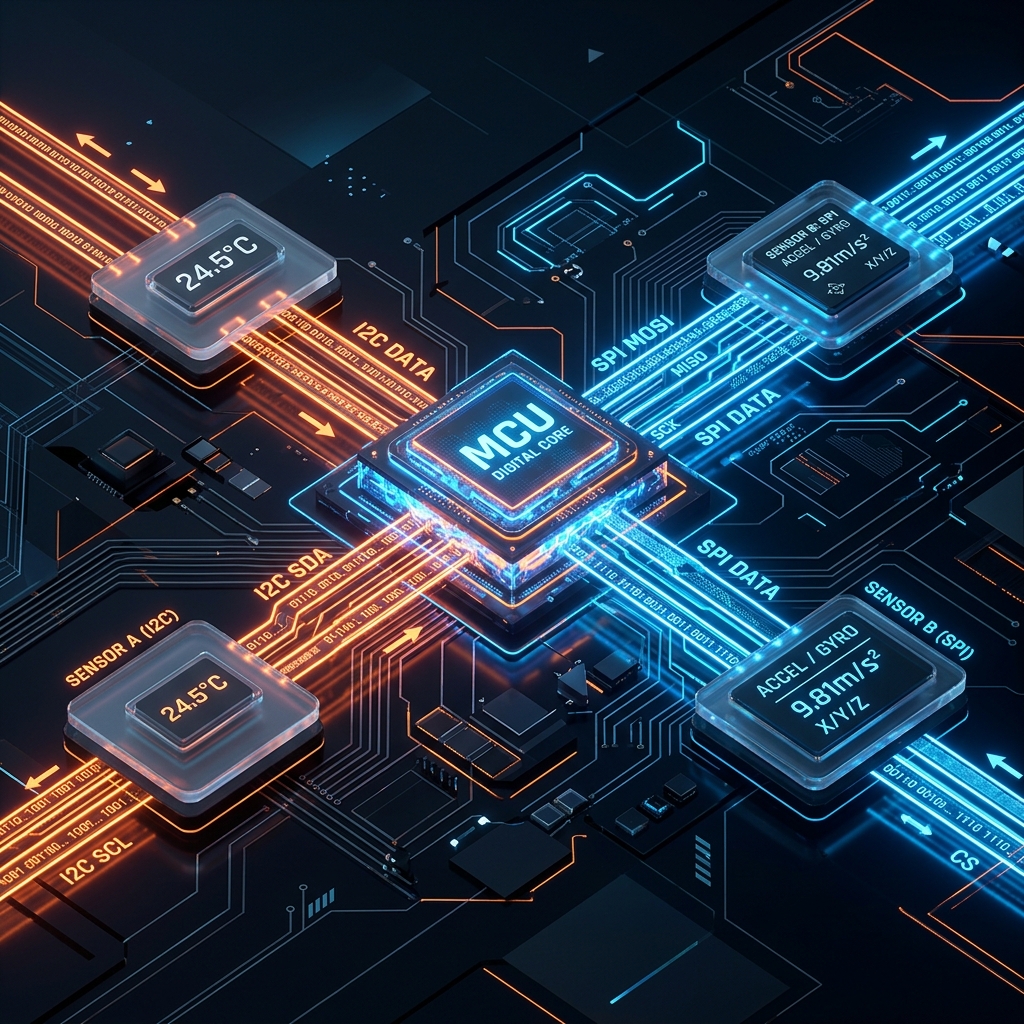
I2C uses only two wires: Serial Data (SDA) and Serial Clock (SCL). It supports multiple masters and multiple slaves on the same bus, using addressing to determine who is communicating. While it saves pins, it is generally slower than SPI and requires pull-up resistors.
SPI: High-Speed Simplicity
SPI uses four wires: Master Out Slave In (MOSI), Master In Slave Out (MISO), Serial Clock (SCK), and Chip Select (CS). It offers full-duplex communication and operates at much higher speeds than I2C, making it ideal for SD cards and LCD displays. However, every new slave requires an additional CS line.
Conclusion
Use I2C when you have many devices and limited pins, and use SPI when speed is the absolute priority.